

It’s usually a property manager who rings, not the tenant. Someone who has rented the same unit for twenty-odd years has moved into aged care, or passed away, and the place is still full. The family might live interstate. The vacate date doesn’t move. A house clearance service that works mostly with older clients approaches this kind of job very differently to a rubbish removal crew, and in a rental that difference shows up quickly.
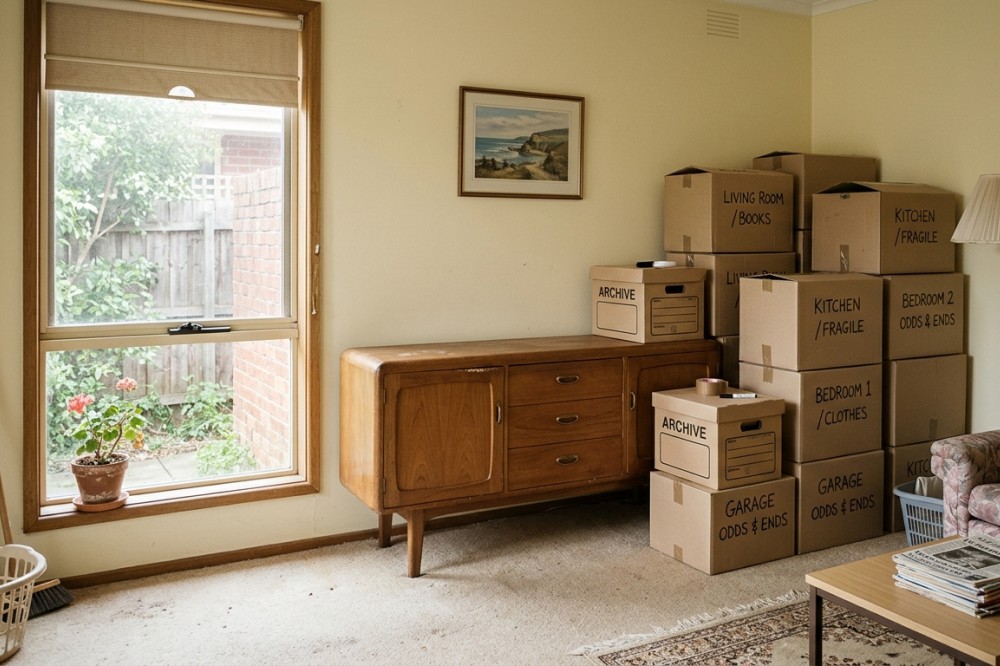
Long-Term Rentals Fill Up Just Like Family Homes
Twenty years in a rental leaves about as much behind as twenty years in a house someone owns. Older tenants who’ve stayed put that long don’t live like they’re about to move. They bought furniture to suit the rooms. The second bedroom slowly became storage, and the carport shed filled up with things nobody has opened since the last tenant before them moved out.
So the volume surprises people. A two-bedroom unit can take longer to clear than a larger property that’s already been partly sorted, because every drawer and cupboard is still exactly as the tenant left it.
Who Has to Say Yes Before Anything Leaves
The tenant, or whoever is legally acting for them, needs to authorise the clearance before a single box goes out the door. For a tenant who has moved into care, that’s often an adult child holding power of attorney. When a tenant has died, it’s usually the executor or next of kin, and Victoria has specific rules about goods left behind in a rented property. Consumer Affairs Victoria sets those out, and it’s worth checking them before a clearance date gets locked in rather than after.
Written confirmation protects everyone. Families sometimes disagree about what should happen to a parent’s belongings, and a property manager doesn’t want to be caught in the middle of that.
What a House Clearance Service Actually Handles in a Rented Home
Everything belonging to the tenant gets sorted into family, sell, donate, recycle and rubbish, the same way we’d approach any house clearance in Melbourne. Rentals add one complication most owner-occupied homes don’t have. Some of what’s inside belongs to the landlord.
The condition report from the start of the tenancy is the most useful document on the day. It shows which whitegoods, blinds and furnishings stay with the property, so nothing of the owner’s ends up on the truck by mistake. Beyond that, a typical rental clearance covers:
- Photos, letters and personal papers, boxed and set aside for the family regardless of condition
- Jewellery, antiques and collectables, flagged for a proper look before anyone decides what they’re worth
- Furniture and household goods in decent shape, sold or donated rather than dumped
- Genuine rubbish, plus recycling separated properly so less of it ends up in landfill
Nearly four decades of this work teaches you where the value tends to hide. Very often it’s in a sideboard drawer or a box at the top of a wardrobe that the family assumed held nothing important.

Clearing a Parent’s Rental From a Distance
Grown children and grandchildren are usually the ones coordinating this, and plenty of them can’t be in Melbourne for more than a weekend. Some want to walk through first and take what matters. Others would rather it all be handled and just receive the personal items afterwards. Both are fine. The clearance can be timed around a family visit, with keys collected from the property manager on the day.
There’s grief in these jobs even when nobody has died. An older person leaving a home they’ve rented for decades is losing a place that was theirs in every way but the title.
Book the Clearance Before the Vacate Date, Not After
Leaving the clearance until the week the lease ends is where things go wrong. The final inspection and the bond clean both depend on an empty property, so the clearance has to happen first. Cleaners and agents book out too. Most rental units can be cleared in a single day once the family has made its decisions.
If you’re a property manager or family working towards a vacate date, get in touch with Lighthouse Estate Clearances. Dave can talk you through timing and what’s involved.