

Understanding the Importance of Valuing Estate Items
When you’re dealing with a deceased estate, the task of sorting through a lifetime of belongings can feel overwhelming. It’s a period often marked by grief, and the last thing you want is added stress. However, understanding the value of the items within the estate is a critical step, not just for practical reasons, but also to honour the deceased’s wishes and ensure fairness among beneficiaries. This process is more than just tidying up; it’s about making informed decisions that can have significant financial and emotional implications.
Proper valuation helps prevent disputes and ensures that assets are distributed equitably. Without a clear understanding of what items are worth, there’s a greater risk of family disagreements, especially when multiple people have an interest in specific possessions . It also allows for accurate reporting for probate and tax purposes. For those managing a deceased estate clearance, taking the time to assess items correctly can save considerable trouble down the line. It allows you to identify what might be of monetary worth, what holds deep sentimental value, and what is simply no longer needed.
Consider these points when approaching the valuation:
- Monetary Value: This refers to the price an item could fetch on the open market. It’s influenced by rarity, condition, demand, and provenance.
- Sentimental Value: This is the personal worth an item holds due to memories, associations, or its connection to the deceased. It’s subjective and not tied to market price.
- Practical Value: Some items may have ongoing utility, such as functional furniture or appliances, which can be considered in their own right.
Approaching the valuation process with a clear head, even amidst emotional turmoil, is paramount. It allows for objective decision-making, ensuring that both the financial and personal legacies of the deceased are respected.
Initial Steps: Inventory and Organization
Before you can even think about what to keep, sell, or donate, you need to get a handle on what’s actually there. This might sound obvious, but it’s the bedrock of the entire process. Without a clear picture of the estate’s contents, you’re essentially flying blind, which can lead to missed valuables, unnecessary stress, and potential disputes among family members. Bereavement property clearance is a complex but necessary part of estate management. It requires a systematic approach to ensure all aspects are covered and minimising the emotional toll on those involved.
Creating a Comprehensive Inventory List
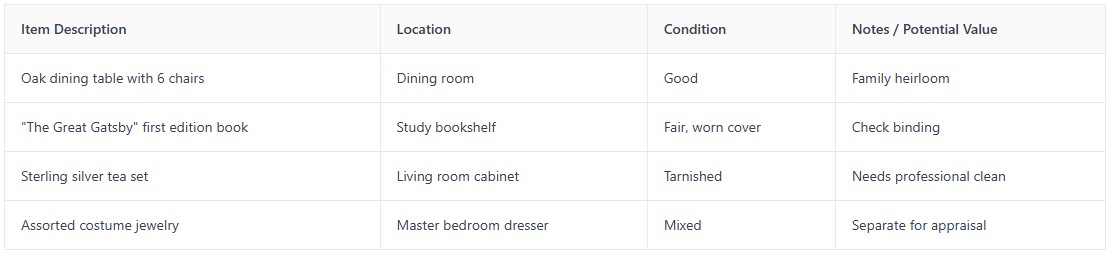
Think of this as the estate’s “master list.” It’s not just about jotting down “some books” or “a table.” You need to be thorough. Start room by room, and for each item, record:
- Item Description: Be specific. Instead of “chair,” write “Queen Anne style armchair, mahogany, upholstered in floral chintz.” For smaller items, group them logically (e.g., “Set of 6 silver-plated dessert spoons”).
- Location: Note where you found the item (e.g., “Master bedroom wardrobe,” “Kitchen pantry shelf 3”). This helps later if items need to be retrieved.
- Condition: Briefly describe its state (e.g., “Good,” “Minor scratches,” “Needs repair,” “Worn”).
- Potential Value/Notes: If you already suspect something is valuable or has significant sentimental meaning, make a note of it. This is where you might jot down “possible antique,” “Grandmother’s sewing box,” or “check for maker’s mark.”
This detailed inventory is your first line of defence against overlooking anything important. It provides a factual record that can be referenced by everyone involved.
Here’s a simple table structure you might use:
Organizing Items for Valuation
Once you have your inventory list, the next step is to physically sort the items. This is where the “four-box method” can be incredibly helpful. Set up four distinct areas or boxes, clearly labelled:
- Keep Permanently: Items with clear ownership, immediate use, or irreplaceable sentimental value. This should ideally be the smallest category.
- Store Temporarily: Items that need more time for evaluation, family discussion, or professional appraisal. Think of this as a holding zone.
- Donate or Sell: Functional items without specific family claims that can benefit others or generate income for the estate.
- Discard: Broken items, expired products, or anything with no resale or donation value.
Working systematically, room by room, helps maintain momentum and prevents decision fatigue. Focus on completing one space before moving to the next. For items in the “Store Temporarily” box, especially those that might be sensitive to environmental changes like old photographs, documents, or wooden furniture, consider using a climate-controlled storage unit. This protects them from temperature and humidity fluctuations while you make your final decisions.
The process of sorting through a loved one’s belongings is often emotionally taxing. It’s perfectly normal to feel overwhelmed. Taking breaks, seeking support from family or friends, and acknowledging your feelings are all part of managing this difficult task. Remember, the goal is to honour their memory, not to rush through decisions that cause further distress.
Methods for Valuing Different Types of Items
Appraising Antiques and Collectibles
When you encounter items that appear to be old or part of a collection, it’s wise to pause before making any decisions. These pieces often require a specialist’s eye. Think about things like vintage toys, old coins, stamps, or furniture that looks particularly ornate or well-made. The key here is to avoid undervaluing something that could be quite significant. A general appraisal might miss the nuances that make a collectible truly valuable. For these items, seeking out an appraiser who specialises in that specific category – be it antique silverware, rare books, or military memorabilia – is the most sensible approach. They understand the market trends, the historical context, and the condition factors that influence price. While appraisals do have a cost, it’s an investment that can prevent substantial financial loss.
Valuing Household Furniture and Appliances
For everyday items like furniture and appliances, the valuation process is generally more straightforward. Consider the age, condition, brand, and current market demand. A modern, well-maintained sofa from a popular brand will likely hold more value than a very old, worn-out armchair. Similarly, a functional, recent model refrigerator will be worth more than a decades-old one. For items that are still in good working order and relatively modern, you might consider selling them through online marketplaces or at a local auction. If they are older, damaged, or simply outdated, they may be more suited for donation or disposal.
Assessing the Value of Jewelry and Precious Metals
Jewellery and precious metals, such as gold, silver, and platinum, have a more direct link to market prices. The value is often determined by the weight and purity of the metal, along with the presence and quality of any gemstones. For gold and silver items, knowing the karat (e.g., 10K, 14K, 18K for gold) is important. You can often find this stamped on the piece itself. For items with significant gemstones or unique craftsmanship, a professional appraisal is recommended to capture their full worth. Be aware that the market price for precious metals can fluctuate daily.
Determining the Worth of Art and Decor
Valuing art and decorative items can be complex. For mass-produced decorative pieces, their value is usually minimal, often based on aesthetic appeal and current trends. However, original artwork, signed prints, or pieces by known artists can have considerable monetary value. Researching the artist’s name is a good starting point. If the artist is recognised, look for comparable sales of their work. For unique or high-value art, engaging a qualified art appraiser is the best course of action. They can assess authenticity, condition, provenance, and market demand to provide an accurate valuation.
Deciding What to Keep, Sell, or Donate
Once you have a clear inventory and a sense of the monetary worth of various items, the next, often more challenging, phase begins: deciding the fate of each possession. This process requires a delicate balance between practicality and sentiment, and it’s where many people find themselves feeling overwhelmed. It’s not just about clearing out a house; it’s about honouring a life and making thoughtful decisions for the future.
Sentimental Value vs. Monetary Value
This is where the real work happens. You’ll encounter items that are clearly valuable financially, others that hold deep personal meaning, and many that fall somewhere in between. It’s important to understand that sentimental value and monetary value are distinct. An item might be priceless to you because it belonged to a loved one, but hold very little appeal or worth on the open market. Conversely, something you might consider junk could be a rare collectible worth a significant sum.
- Sentimental Value: This is tied to memories, personal history, and emotional connections. A child’s drawing, a worn-out favourite armchair, or a collection of letters might have immense sentimental worth but little financial value.
- Monetary Value: This is what an item can be sold for. It’s determined by market demand, rarity, condition, and provenance. Antiques, fine art, jewellery, and certain collectibles typically fall into this category.
The key is to separate these two values when making decisions. Don’t let emotional attachment prevent you from selling an item that could significantly benefit the estate financially, and don’t discard something deeply meaningful simply because it won’t fetch a high price.
When you’re unsure about an item’s monetary worth, it’s always best to get a professional appraisal. This can prevent you from mistakenly selling a valuable asset for a fraction of its worth or holding onto something with no financial upside that could be better used elsewhere.
Here’s a practical approach to sorting:
- Keep Permanently: These are items with undeniable sentimental significance that you or a direct family member will cherish and use. This should ideally be the smallest category.
- Store Temporarily: Items that require further discussion with family, await appraisal, or are seasonal and need to be reviewed later. A climate-controlled storage unit is advisable for items like furniture or electronics during this phase.
- Sell or Donate: Items that are functional and in good condition but don’t hold significant personal meaning for the immediate family. Consider local charities that offer pick-up services for larger items, or explore online marketplaces and estate sales for items with higher resale potential.
- Discard: Items that are broken, beyond repair, or have no resale or donation value. Ensure responsible disposal methods are used.
Making these decisions can be emotionally taxing. It’s perfectly acceptable to take breaks, seek support from friends or family, or even engage a professional organiser to help manage the process. The goal is to honour the deceased’s memory while creating a clear path forward for their belongings.
Professional Help: When to Call an Appraiser
While you might feel confident assessing the value of everyday items, some possessions require a more specialised eye. Engaging a professional appraiser is a wise step when you encounter items that could hold significant monetary worth or are part of a specialised collection. This isn’t about doubting your own judgement; it’s about ensuring accuracy and fairness, especially when dealing with legal or financial matters related to the estate.
Think about it this way: you wouldn’t try to perform surgery on yourself, would you? Similarly, when the stakes are high, bringing in someone with the right training and experience makes all the difference. This is particularly true for items like:
- Antiques and vintage furniture
- Fine art, including paintings, sculptures, and rare prints
- Jewellery, gemstones, and precious metals
- Collectibles such as stamps, coins, rare books, or memorabilia
- High-end electronics or designer goods
These categories often have fluctuating market values and require specific knowledge to assess correctly. A generalist might overlook subtle details that significantly impact an item’s worth. For instance, the maker’s mark on a piece of pottery, the specific alloy of a metal, or the condition and provenance of a painting can all be critical factors.
The cost of an appraisal is an investment in accuracy. It helps prevent the estate from being undervalued, which could lead to financial losses or disputes among beneficiaries. Furthermore, a formal appraisal document can be essential for insurance purposes or if the estate needs to go through probate.
When should you bring in the experts? Ideally, after you’ve completed your initial inventory and organisation, and you’ve identified items that seem potentially valuable but you’re unsure of their exact worth. It’s best to do this before you decide to sell, donate, or distribute these items. This timing allows for accurate valuation for estate purposes and ensures you’re making informed decisions about each piece. While appraisal fees can vary, budgeting for them is a sensible part of estate management.
Moving Forward with Confidence
Sorting through a loved one’s estate is a big job, no doubt about it. It’s a process that asks a lot of you, both emotionally and practically. By taking things one step at a time, getting help when you need it, and remembering to be kind to yourself, you can get through it. Whether you’re keeping cherished items, selling things to help with costs, or donating to help others, you’re honouring their memory while also moving forward. It’s about finding a balance that feels right for you and your family.